· 12 September 2026· By Dr Ashwini dahat
Dr Ashwini Dahat Ilme
This post is to get to know the Professional in details
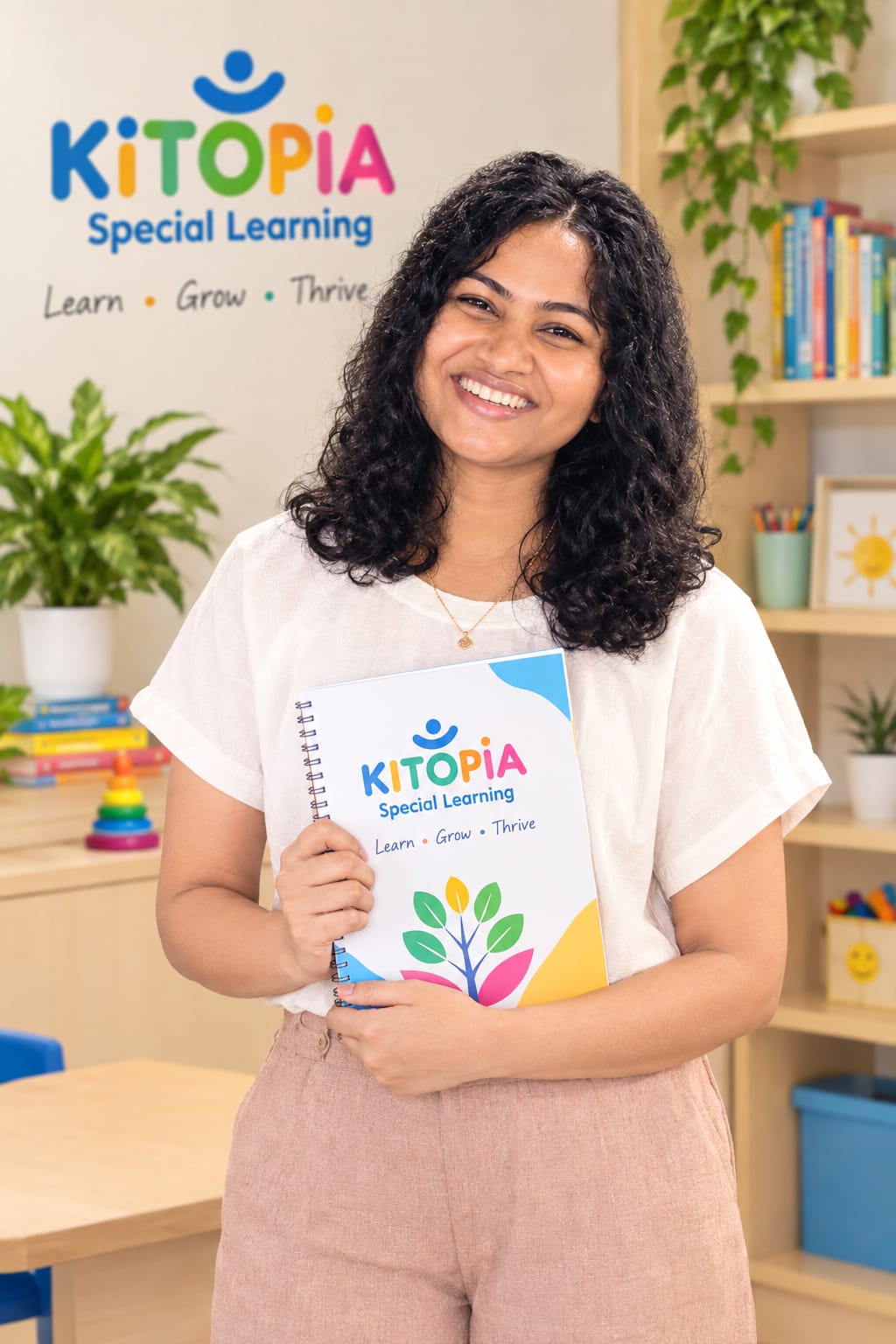
Dr. Ashwini Dahat Ilme: A Journey from Occupational Therapy to Empowering Lives
Senior Occupational Therapist | Neurodevelopmental Rehabilitation Expert | Educator | Disability Inclusion Advocate
There are professionals who practise a profession, and then there are professionals who gradually turn their profession into a mission.
Dr. Ashwini Dahat Ilme belongs to the latter.
With more than 15 years of experience across clinical practice, neurodevelopmental rehabilitation, academics, community programmes and disability advocacy, her journey has extended far beyond the conventional boundaries of occupational therapy.
Her work has consistently revolved around one larger purpose: helping individuals with disabilities and their families move towards greater dignity, independence, participation and inclusion.
Her academic foundation includes B.O.Th., M.O.Th. in Neurosciences and a Diploma in Acupuncture (D.Ac.), complemented by professional training in Clinical Pilates, Sensory Integration, Kinesio-Taping and aerobics and pre/postnatal training.
But qualifications tell only part of her story.
The more interesting story is what she has chosen to do with that knowledge.
Where Clinical Expertise Meets Compassion
Dr. Ashwini's professional journey began with hands-on clinical experience in neurodevelopmental rehabilitation.
Her early work at the Neurodevelopmental Clinic in Ramnagar gave her foundational experience in Neurodevelopmental Treatment (NDT) and sensory integration. She subsequently worked as a Pediatric OT Specialist, focusing on early intervention and sensory therapy for children with autism, ADHD and other neurodevelopmental disorders.
At Daga Hospital, her responsibilities expanded to include pediatric and adult neuro-rehabilitation, interdisciplinary collaboration, assessment and monitoring of high-risk babies, as well as awareness and orientation programmes for professionals working within community and school-based initiatives.
These experiences helped establish an important foundation in her practice:
therapy must ultimately translate into participation in real life.
A child is not simply a collection of developmental milestones. A person is a student, a family member, a friend, a learner and eventually a member of the wider community.
That understanding has remained central to her professional philosophy.
A Significant Chapter at the Composite Regional Centre, Nagpur
A major chapter in Dr. Ashwini's career has been her association with the Composite Regional Centre, Nagpur, under the Ministry of Social Justice & Empowerment.
As a Senior Lecturer Occupational Therapist, her role has extended across clinical services, academics, professional education, screening, awareness and community programmes.
She has been involved in:
Screening and awareness camps for early identification and intervention
National training and public-awareness programmes
Teaching theory and practical components of D.Ed. Special Education
Academic committees and curriculum-related activities
University and RCI examinations as invigilator, moderator and evaluator
Guest lectures in schools and government platforms
Continuous Rehabilitation Education (CRE) programmes over approximately eight years
This combination of clinical and academic responsibilities gave her an unusual breadth of experience.
She was not only working with children and families, but also with students, professionals, educators and institutions.
That distinction became important in shaping her role as an educator and capacity builder.
From Individual Therapy to Community Impact
Dr. Ashwini's work has never been restricted to one-to-one clinical intervention.
Her professional experience includes organising and participating in assessment, awareness and intervention programmes at taluka, district and state levels, along with community and institutional workshops and training programmes.
She has organised more than 50 workshops, professional meets and training programmes, while also contributing to disability-awareness initiatives and professional education.
She has also contributed as a national-level panelist, lecturer and question-bank contributor with NIEPMD and served as an evaluator and observer for professional examinations under RCI.
These experiences have strengthened her belief that meaningful rehabilitation requires more than individual expertise.
It requires knowledge sharing, collaboration and empowered families and professionals.
The Parent Is Not a Bystander
One of the strongest themes running through Dr. Ashwini's work is parent empowerment.
When a child receives a developmental diagnosis, families often find themselves navigating a complicated world of assessments, therapies, educational decisions and uncertainty.
Dr. Ashwini's approach places importance on helping parents understand their child's needs and become active participants in the rehabilitation journey.
Her experience in parent and PwD training, awareness programmes and public-health education has reinforced a simple idea:
A therapist may meet a child for a limited period each day. The family is part of that child's world every day.
Empowering parents therefore becomes an essential component of sustainable rehabilitation.
A Voice for Autism Awareness and Disability Education
Dr. Ashwini has developed a particular professional focus around Autism Spectrum Disorder, sensory processing and neurodevelopmental rehabilitation. Her CV identifies autism and sensory processing disorder among her areas of expertise.
But her contribution to disability awareness extends beyond clinical terminology.
She has worked to make complex developmental and therapeutic concepts understandable to families, educators and professionals.
This commitment to communication eventually found another expression: writing.
“Mujhe Bhi Khelna Hai”: When Professional Knowledge Becomes a Book
Perhaps one of the most distinctive achievements in Dr. Ashwini's journey is her authorship of Mujhe Bhi Khelna Hai, a guidebook for children with autism.
The book was launched by Hon'ble Union Minister Shri Nitinji Gadkari, and it received the Indian Academy of Book Award in 2023 for literary excellence in disability education.
For an occupational therapist, writing a book for the wider community represents an important transition—from providing intervention directly to creating knowledge that can travel beyond the therapy room.
The title itself carries a powerful message.
A child with autism does not simply need therapy.
The child wants to play. To participate. To explore. To belong.
And sometimes, the most meaningful rehabilitation begins when we understand that desire.
Innovation Beyond Conventional Boundaries
Dr. Ashwini's professional interests have also extended into complementary and movement-based approaches, including Clinical Pilates, acupuncture, Kinesio-Taping and aerobics/pre- and postnatal training.
Her multidisciplinary exposure reflects her broader professional outlook: rehabilitation is dynamic, and therapists must continue learning, adapting and exploring ways to support function.
Her work has also included designing and setting up rehabilitation equipment centres for trusts and consultants at Lata Medical Research Centre, Nagpur, as well as consulting engagements with NGOs and an international university context.
The Vision: Beyond Therapy
Perhaps the clearest picture of Dr. Ashwini's future direction comes from her professional ambition.
She envisions working relentlessly towards enabling Divyangjans to live with dignity, independence and inclusion.
Her long-term vision includes establishing a well-equipped school and vocational training institute for children and young adults with disabilities, developing sustainable models of therapy, education and livelihood, contributing to national advocacy and creating capacity-building programmes for parents, caregivers and professionals.
This vision reflects an important evolution in rehabilitation thinking.
The question is no longer simply:
“How can we improve this child's skills?”
It becomes:
“How can we build a life in which this individual can participate, contribute and thrive?”
The Next Chapter: Kitopia Special Learning
This larger philosophy now finds a natural extension through Kitopia Special Learning.
The vision is to bring together therapeutic intervention, learning, developmental resources, parent education and child-centred support in a way that is practical and meaningful for families.
The emphasis is not on seeing a diagnosis first.
It is on seeing the child first.
Their strengths.
Their interests.
Their challenges.
Their environment.
Their family.
And their possibilities.
This is particularly important in neurodevelopmental rehabilitation, where no two children present in exactly the same way and where meaningful progress can look very different from one child to another.
More Than a Therapist
Dr. Ashwini Dahat Ilme's professional journey cannot be reduced to a designation.
She is a clinician who has worked directly with children and adults.
She is an educator who has taught students and trained professionals.
She is a speaker who has contributed to awareness and professional programmes.
She is an author who has translated professional understanding into disability education.
She is an advocate who believes that people with disabilities deserve dignity and inclusion.
And she is an entrepreneur and creator building new platforms through Kitopia Special Learning and NeuroBloom.
Her professional identity has evolved because her understanding of rehabilitation has evolved.
She has moved from asking only what therapy can do for a child to asking what therapy, education, family, community and society can build together.
A Philosophy of Possibility
At the heart of Dr. Ashwini's work is an idea that is both simple and profound:
Every child deserves to be understood before being expected to change.
That means looking beyond the diagnosis.
Beyond the deficit.
Beyond the checklist.
And seeing the person.
Because rehabilitation is not ultimately about making someone fit into a predetermined idea of “normal.”
It is about creating opportunities for participation, independence, confidence, learning and belonging.
After more than 15 years in the field, Dr. Ashwini Dahat Ilme continues to build on that philosophy—through clinical practice, education, advocacy, writing and the growing vision of Kitopia Special Learning and NeuroBloom.
Her journey is therefore not simply the story of an occupational therapist.
It is the story of a professional who continues to ask a bigger question:
What more can we create when we stop looking only at limitations—and start looking at possibilities?